

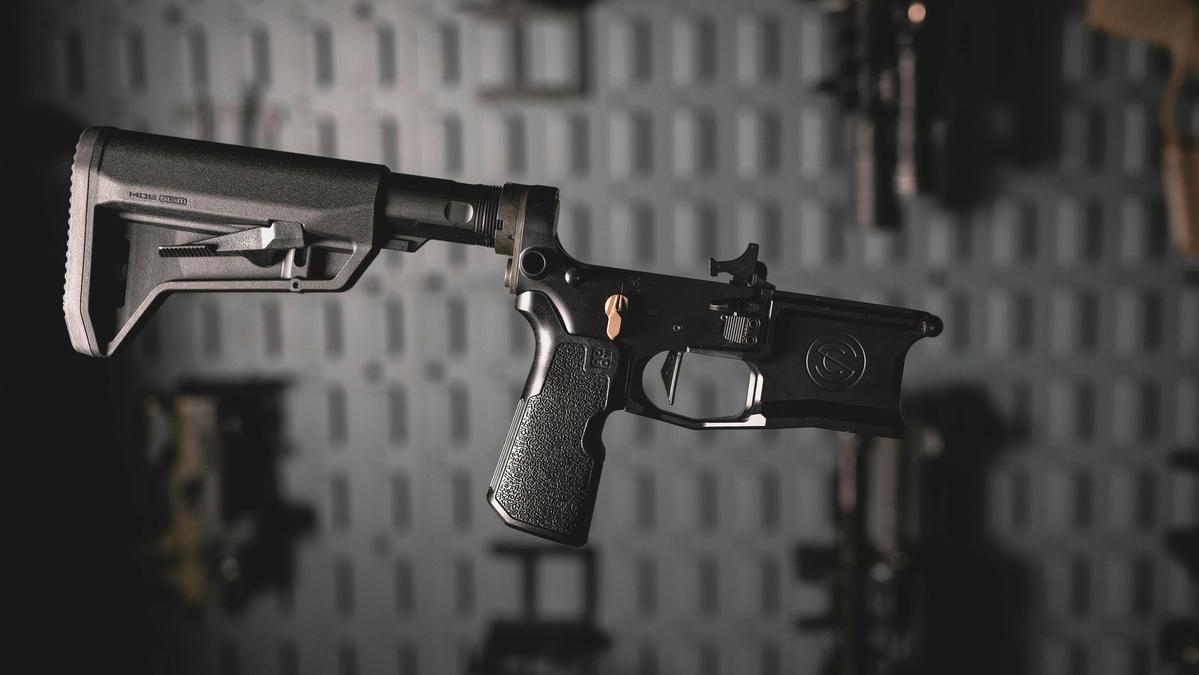
Last updated: May 8, 2026 — Compatibility rules drift slowly. This guide gets refreshed when something meaningful changes: new chamber specs, optic footprints, brace regulations, or gas system standards.
The AR-15 is a Lego gun until it isn't. Most parts from most manufacturers drop right in because the platform runs on decades-old military standards. But there are eight places where parts refuse to work together, and three of those can break your gun or hurt you.
This guide maps every compatibility trap that matters: the ones that cost you money, the ones that turn your build into a non-functioning paperweight, and the ones that are genuinely unsafe. Each section leads with what breaks if you get it wrong, then gives you the rule to follow.
Out of scope: AR-10, AR-9, .300 BLK/.308/6.5 Creedmoor builds, large-frame receivers. Those are different platforms with different standards and they deserve their own guides.
01Start here if you're troubleshooting
Land on the section that matches your problem:
- Your stock wobbles or won't seat → Buffer tubes + Stocks
- Your BCG won't drop into the upper → BCG compatibility
- Your handguard won't install → Barrel nut compatibility
- Your gun won't cycle or ejects weird ��� Gas system + Buffer weight
- You're not sure if your ammo is safe → Chamber specs
- Your gas tube doesn't reach or won't align → Gas tube length
- Your suppressor mount won't thread on → Muzzle devices
- Your optic blocks your iron sights → Optic height
- Your magazine won't seat or drop free → Magazine compatibility
Building from scratch? Read straight through. The sections follow the physical build order from lower to muzzle.
02Table of contents
- Why compatibility matters
- Mil-spec vs commercial: the basics
- The lower receiver group
- Trigger groups
- Buffer system: tubes, weights, springs
- Stocks and braces
- Upper receiver and handguard interface
- Barrels: the compatibility hub
- Gas system lengths
- Gas blocks and gas tubes
- Bolt carrier groups (BCG)
- Charging handles
- Muzzle devices
- Optics and iron sights
- Magazines
- Lights, foregrips, slings, and accessories
- Compatibility cheat sheet
- Common mistakes (FAQ)
- Glossary
031. Why compatibility matters
The AR-15 was designed by Eugene Stoner in the late 1950s and standardized by Colt and the U.S. military as the M16/M4 family. That long history is the platform's biggest advantage: most parts from most manufacturers are built to the same dimensional standards, so they interchange.
But "most" is doing a lot of work in that sentence.
There are eight compatibility traps where parts from Vendor A refuse to work with parts from Vendor B:
- Buffer tube diameter — mil-spec vs commercial (stocks won't seat or will rattle)
- Chamber vs cartridge — .223-only chamber + 5.56 ammo = unsafe pressure spike
- Gas system length vs barrel length — wrong pairing = won't cycle or beats itself to death
- Barrel nut vs handguard — most free-float handguards use proprietary nuts that don't interchange
- BCG bolt face vs cartridge — wrong bolt face = catastrophic failure
- Gas tube length vs gas system — tube too short = won't reach; too long = won't fit
- Muzzle device threading — 5.56 is 1/2"-28; .308 is 5/8"-24; they're not interchangeable
- Optic footprint — RMR, DeltaPoint Pro, and Holosun K use different mounting patterns
Three of those (#2, #5, and partly #3) can cause unsafe malfunctions. The rest will just cost you time and money when parts don't fit.
If you've never built an AR before: Start here, then read How to Build an AR-15: Every Part Explained for the mechanical assembly walk-through.
If you're deciding between a complete upper or a parts build: Read Complete Upper vs. Build From Parts first.
042. Mil-spec vs commercial
"Mil-spec" refers to the U.S. military Technical Data Package (TDP) for the M4/M16 — a set of dimensional, material, and process standards. For compatibility, two things matter:
Buffer tube diameter
The rule:
- Mil-spec receiver extensions: 1.148" OD
- Commercial receiver extensions: 1.168" OD
What breaks:
- Mil-spec stock on a commercial tube = rattles and won't lock
- Commercial stock on a mil-spec tube = binds or won't seat
How to verify:
Check your buffer tube spec before buying a stock. If it doesn't say "commercial," assume mil-spec. Most modern builds use mil-spec. Match tube diameter to stock type or your stock won't function.
Material and finish on critical parts
Mil-spec lowers are forged from 7075-T6 aluminum. Mil-spec BCGs use Carpenter 158 or 9310 steel bolts with MPI (magnetic particle inspection) and HPT (high-pressure test) markings.
This matters for quality and durability, but it doesn't affect compatibility — a forged 6061 lower still accepts a mil-spec trigger and buffer tube. For compatibility purposes, buffer tube diameter is the only mil-spec dimension that will break your build.
053. The lower receiver group
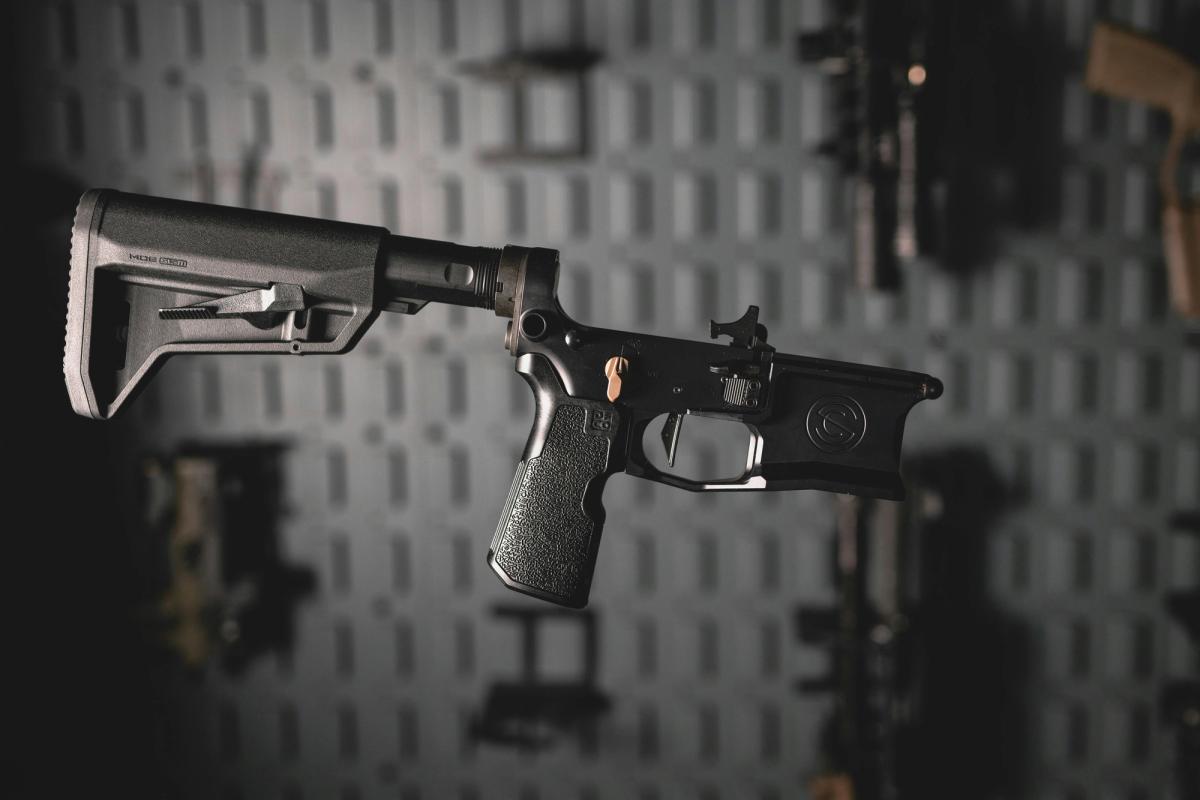
The lower receiver is the serialized firearm. Everything else is a part. The lower houses the trigger, safety, bolt catch, magazine catch, and takedown pins. The buffer tube threads onto the rear and the upper pivots on the front pin.
Stripped vs complete lowers
Stripped: Just the forged receiver. You install the lower parts kit (LPK), grip, trigger, and stock.
Complete: LPK, grip, trigger, and stock already installed.
The tradeoff: Complete lowers save 30 minutes of roll-pin work. Stripped lowers are more economical if you're installing an aftermarket trigger or grip anyway.
Find lower receivers in the catalog →
Takedown pin sizes
The rule: Mil-spec takedown and pivot pins are 0.250" (1/4"). Some old Colt receivers used 0.315" front pivot pins.
What breaks: If you're matching a pre-1985 Colt upper to a modern receiver, you may need an offset bushing or pivot pin adapter.
How to verify: For 99% of modern builds, all parts are small-pin (0.250") and this never comes up. If you're working with vintage Colt parts, check the pin diameter before ordering.
Upper/lower fitment tolerance
The rule: Receivers from different manufacturers can have tolerance stacking — some pairs fit tight, some rattle.
What breaks: A loose upper/lower junction causes accuracy problems and annoying rattling. An over-tight junction makes takedown pins hard to push out.
How to fix:
- Rattle: Accuwedge or O-ring on the rear takedown pin
- Binding: Oversized takedown pins or light sanding on the pin holes
Most brand pairings work fine. Anderson lowers + Aero uppers and PSA lowers + BCM uppers are known for occasional fitment issues.
Lower parts kits (LPK)
A standard LPK contains: trigger, hammer, disconnector, springs, pins, safety selector, bolt catch, takedown/pivot pin detents, magazine catch, buffer retainer, and spring. Some include trigger guard and grip; some don't. Read the parts list before buying.
If you're installing an aftermarket trigger: Buy an "LPK without fire control group" to avoid paying for a trigger you won't use.
064. Trigger groups
A trigger changes how the rifle feels more than any other single part. For compatibility, here's what matters:
Single-stage vs two-stage
Single-stage: One consistent pull weight from start to break. Most factory mil-spec and most match triggers. Typical range: 2.5 lb (competition) to 6 lb (mil-spec).
Two-stage: Light first-stage take-up, then a wall, then a clean break. Favored for precision shooting. Examples: Geissele SSA-E, Larue MBT-2S.
Compatibility: Both work in any standard AR-15 lower. Picking one is preference, not compatibility.
Drop-in cassettes vs traditional
Traditional: Separate hammer, trigger, disconnector, and springs that you pin into the lower individually.
Drop-in cassette: Self-contained unit (Timney, CMC, Hiperfire, Elftmann) that drops into the trigger pocket and pins in place.
What breaks:
- Some cassettes require anti-rotation pins to keep the housing from spinning — check the manufacturer's instructions
- A few proprietary 45°/60° throw safeties interact poorly with certain cassettes — read the safety vendor's compatibility list
Ambi safeties and binary triggers
Ambidextrous safety selectors (Battle Arms, Radian Talon) work with the vast majority of triggers.
Binary triggers (Franklin Armory BFSIII, Fostech Echo) work in any standard lower, but state and federal legality varies. Verify current rules before buying.
Browse triggers in the catalog →
075. Buffer system: tubes, weights, springs
In the simplest explanation, he buffer system absorbs recoil and cycles the action. It's also the most misunderstood part of an AR build. Get this wrong and your rifle either won't cycle or will beat itself to death.
Buffer tube types
| Tube type | OD | Length | Use |
|---|---|---|---|
| Carbine (mil-spec) | 1.148" | ~7.5" | Collapsible carbine stocks; most builds |
| Carbine (commercial) | 1.168" | ~7.5" | Older AR variants; lower-cost stocks |
| A5 | 1.148" | ~8.5" | Mil-spec OD, longer to fit rifle-length spring + custom buffer |
| Pistol | 1.148" | ~7.5" | Smooth profile with no ridges — for braces or bare tubes |
| Rifle (fixed) | N/A | ~9.6" | Fixed A2 rifle stocks only |
What breaks:
- Wrong stock on wrong tube = rattle or binding (see section 2)
- Rifle buffer in carbine tube = physically won't fit (rifle buffers are longer)
A5 explained: A5 tubes let you run a rifle-length spring in a carbine-length package. This spreads the recoil impulse and reduces felt snap — especially valuable for suppressed builds. A5 tubes accept any mil-spec carbine stock.
Buffer weights
| Buffer | Weight | Typical pairing |
|---|---|---|
| Carbine (standard) | ~3.0 oz | Light carbine builds, .223 |
| H1 | ~3.8 oz | Carbine gas, 16" 5.56 |
| H2 | ~4.7 oz | Mid-length gas, 16" 5.56 |
| H3 | ~5.4 oz | Short-barrel/over-gassed builds |
| A5H0 → A5H4 | 3.8 oz → 6.0 oz | A5 system, tunes for any gas length |
| Rifle | ~5.0 oz | Fixed rifle stocks only; only fits rifle-length tubes |
What breaks:
- Over-gassed gun + light buffer = harsh recoil, brass ejecting at 1-2 o'clock, dented deflector, accelerated wear on BCG and buffer retainer
- Under-gassed gun + heavy buffer = failure to lock back on empty, sluggish bolt cycling, short-stroking
How to diagnose:
- Brass ejecting forward (1-2 o'clock) = over-gassed, add buffer weight
- Bolt won't lock back = under-gassed, reduce buffer weight or open gas block
Buffer springs
Carbine springs: ~10-11" free length, used in carbine and pistol tubes.
Rifle springs: ~12.5" free length, used in rifle and A5 tubes.
What breaks: Carbine spring in rifle tube = excessive compression, hard bolt close. Rifle spring in carbine tube = won't fit or will bind.
Upgrade: Flat-wire springs (Sprinco, Tubb) reduce bolt velocity spike and the buffer "twang" sound — quality-of-life upgrade, not a compatibility change.
Browse buffers and springs in the catalog →
086. Stocks and braces
A stock provides a cheek weld and shoulder anchor. Compatibility comes down to tube type.
By tube type
Carbine mil-spec stocks (Magpul CTR/MOE/SL, B5 SOPMOD, BCM Gunfighter) fit any 1.148" mil-spec carbine or A5 tube.
Carbine commercial stocks fit only 1.168" commercial tubes. Many entry-level rifles ship with commercial tubes — verify before swapping stocks.
A5 tubes accept any mil-spec carbine stock. "A5" refers to the longer tube + buffer/spring system, not a separate stock spec.
Fixed rifle stocks (A1, A2) only mount on rifle-length tubes — not interchangeable with carbine systems.
What breaks: Wrong stock on wrong tube = rattle or binding (see section 2). This is the #1 compatibility mistake new builders make.
Quick-detach (QD) and sling mounts
Most modern stocks include a QD socket or sling-loop slot. If your stock has neither, an end-plate sling mount or tube-mount QD insert adds one without modifying the stock.
Pistol braces
Pistol braces (SB Tactical SBA3/SBA4, Maxim CQB) attach to a pistol-length buffer tube with a smooth exterior and no ridges.
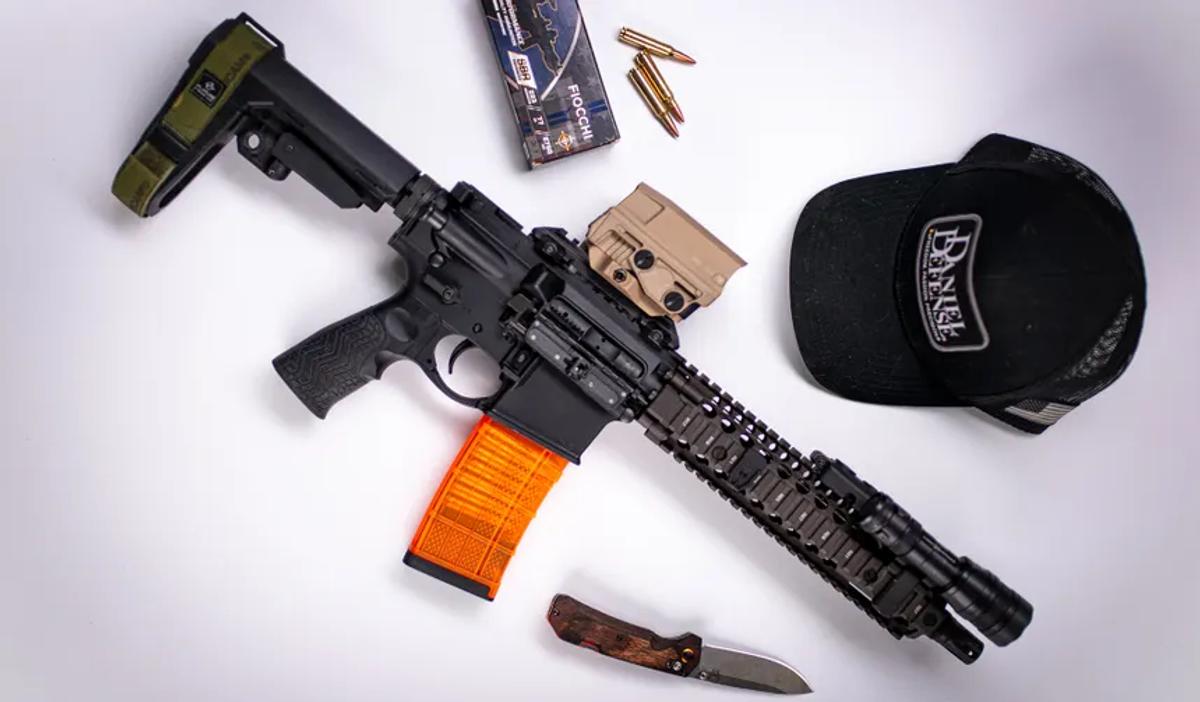
Legal note — not legal advice: Pistol brace classification and SBR rules have changed multiple times since 2023. Verify current ATF guidance and state laws before building or modifying a brace-equipped firearm.
Browse stocks in the catalog →
097. Upper receiver and handguard interface
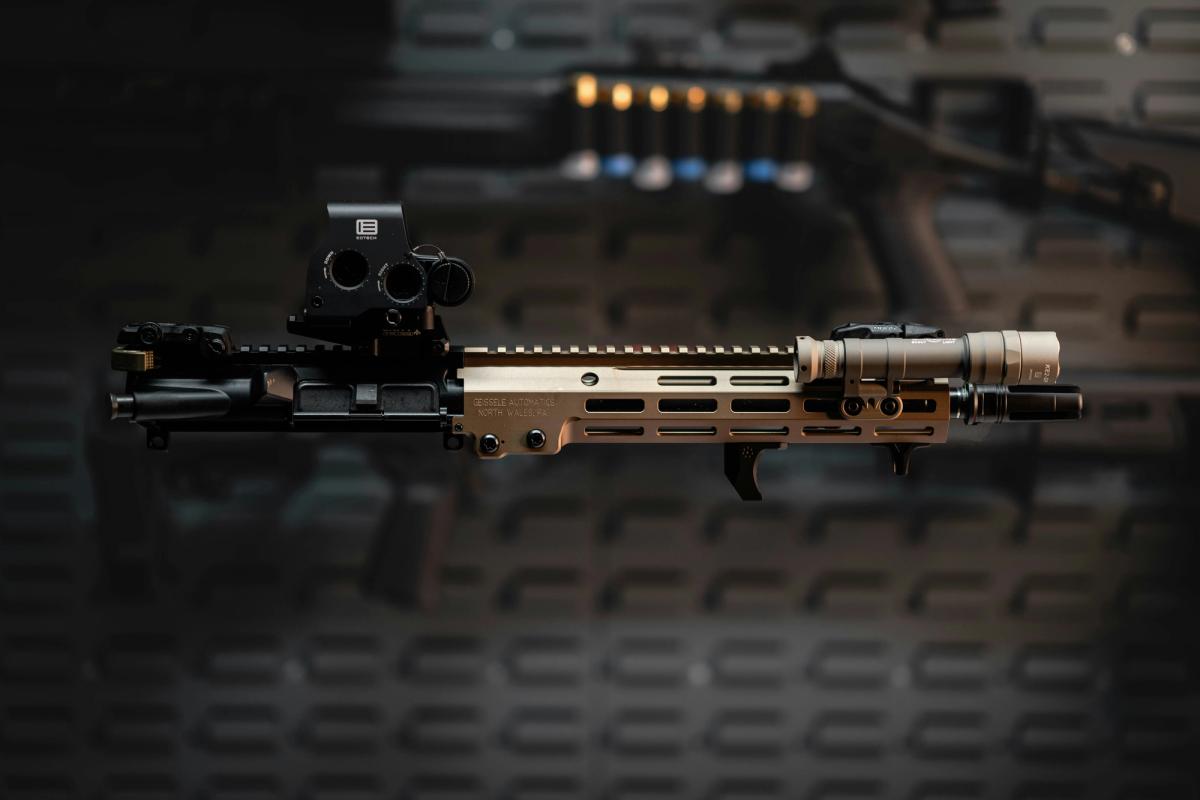
The upper receiver houses the BCG, charging handle, and barrel assembly. This is where most handguard compatibility issues happen.
Upper receiver standards
Modern AR-15 uppers are flat-top with a Picatinny (MIL-STD-1913) rail across the top. The upper itself is largely interchangeable across manufacturers.
M4 feed ramps: Extended cuts in the upper receiver that match the M4-profile barrel extension. They smooth feeding with soft-point ammo and short-barrel rifles.
The rule: Pair an M4-cut upper with an M4-extension barrel. Pairing an M4 upper with a non-M4 barrel is functional but suboptimal (exposed lip). The inverse is worse and can cause feeding issues.
How to verify: Most modern uppers and barrels are M4-profile. If you're mixing vintage parts, check the specs.
Browse uppers in the catalog →
Handguard mounting: free-float vs drop-in
Drop-in: Clamps between the delta ring and front cap. Contacts the barrel. Fast to install but less rigid and transfers heat.
Free-float: Mounts only to the upper receiver via a barrel nut. Does not touch the barrel. Improves accuracy with bipods and rail-mounted accessories. This is the dominant choice today.
Barrel nut compatibility — the #2 compatibility trap
The rule: Most free-float handguards use proprietary barrel nuts and proprietary indexing patterns.
What breaks: You cannot mix a Geissele MK16 handguard with a BCM KMR barrel nut. You cannot mix an Aero Atlas handguard with a Midwest Industries barrel nut. Plan handguard + barrel nut as a matched set or verify mil-spec compatibility before buying.
Exceptions: A few handguards (Centurion CMR, BCM KMR/MCMR, Aero Atlas) use mil-spec or near-mil-spec barrel nuts and are more interchangeable. Read the spec sheet.
What "indexing" means: The barrel nut must be torqued to spec (30-80 ft-lb depending on design) AND rotated so the gas tube channel in the handguard aligns with the gas tube hole in the upper receiver. If you can't time your barrel nut correctly, your gas tube won't install and your build is dead.
Mounting standards: M-LOK vs KeyMod vs Picatinny
Picatinny (MIL-STD-1913): Universal rail slot pattern. Every mount is built for this.
M-LOK (Magpul): Dominant slot system today. The U.S. Marine Corps eval favored it over KeyMod.
KeyMod: Still ships on older designs. M-LOK accessories don't fit KeyMod slots and vice versa.
The rule: If you're building today, M-LOK is the safer long-term bet for accessory selection. Most current handguards are M-LOK.
Browse handguards in the catalog →
108. Barrels: the compatibility hub
The barrel is the single highest-impact part on an AR-15 — and the part with the most compatibility variables. Get this section right and the rest of the rifle falls into place.
Barrel extension dimensions
The barrel extension is the threaded steel block that screws into the chamber end of the barrel and seats into the upper receiver.
The rule: AR-15 barrel extensions are standardized. Barrels from any reputable maker fit any standard upper. (M4 vs non-M4 feed ramp cuts were covered in section 7.)
Length, profile, and twist
| Barrel length | Common gas system | Notes |
|---|---|---|
| 7.5"–10.5" | Pistol | SBR or pistol AR; harsh recoil; cycling can be finicky |
| 10.5"–14.5" | Carbine | Classic M4 range; 14.5" is most common with pin-and-weld muzzle device |
| 14.5"–18" | Mid-length | Sweet spot for 16" 5.56 — softer impulse, longer dwell |
| 18"–20" | Rifle | 20" service-rifle / DMR / varmint builds |
Twist rate controls projectile stabilization:
- 1:7 — stabilizes 62gr–77gr+ bullets (mil-spec M855/M856 and most match loads)
- 1:8 — modern do-it-all rate
- 1:9 — stabilizes lighter 55gr–69gr loads but struggles with heavies
The rule: For 99% of builds, choose 1:7 or 1:8.
Profile determines weight and heat capacity:
- Pencil — light, heats fast (short range / low round count)
- Government / M4 — middle ground, steps for FSB compatibility
- SOCOM / HBAR — heavier, sustains accuracy at high round counts
- Bull / heavy — precision builds, heavy
Chamber: 5.56 NATO vs .223 Wylde vs .223 Remington
Critical safety — do not mix 5.56 and .223 chambers.
Do not fire 5.56 NATO ammo in a .223 Remington-only chamber. Pressure can spike to unsafe levels and cause catastrophic failure.
If your barrel is marked ".223 Rem" only, feed it .223 ammo only.
If it's marked "5.56 NATO" or ".223 Wylde," you can safely fire both 5.56 and .223.
Chamber specs:
5.56 NATO: Rated for higher chamber pressures than .223. Will safely fire both 5.56 and .223 ammo.
.223 Wylde: Hybrid throat geometry. Safe with both 5.56 and .223. Favored by precision shooters for tight match-grade groups.
.223 Remington: Tighter freebore. Do not fire 5.56 NATO ammo in this chamber. Many sporter/varmint barrels are .223-only — always check.
How to verify: Look at the barrel markings. If it says "5.56 NATO" or ".223 Wylde," you're cleared for any 5.56 or .223 commercial ammo. If it says ".223 Rem" only, stick to .223.
Muzzle threading
The rule: Standard AR-15 muzzle thread is 1/2"-28 for 5.56/.223.
AR-10/.308 is 5/8"-24. If you see that thread pitch, it's a different platform.
Anything you screw onto the muzzle — flash hider, comp, brake, suppressor mount — must be 1/2"-28 for a 5.56 AR-15.
Browse barrels in the catalog →
119. Gas system lengths
Once you've chosen a barrel length, gas system length is the next decision. Mismatch it and the rifle either short-strokes and won't lock back, or runs violently over-gassed.
The five gas system lengths
| System | Gas tube length | Typical barrel range | Notes |
|---|---|---|---|
| Pistol | ~6.75" | 7.5"–10.5" | Harsh recoil, over-gassed; SBR/pistol builds only |
| Carbine | ~9.5" | 10.5"–14.5" | Classic M4 setup; works but can be over-gassed on 16" barrels |
| Mid-length | ~11.75" | 14.5"–18" | Sweet spot for 16" 5.56 — softer recoil, less gas in your face |
| Rifle | ~13" | 18"–20" | Service-rifle / DMR builds; smooth cycling, low wear |
| +2 Rifle | ~15" | 20"+ | Specialized precision builds |
What breaks:
- Short gas system on long barrel = over-gassed, harsh recoil, excessive BCG wear, gas in your face (especially suppressed)
- Long gas system on short barrel = under-gassed, won't cycle, failure to lock back
- Gas tube length mismatch = tube won't reach the gas port or won't fit (see section 10)
What "dwell time" means: The time between the gas port opening (when the bullet passes it) and the bullet exiting the muzzle. Longer dwell time = more time for gas pressure to unlock the BCG = softer recoil and less stress on parts.
The rule: Match gas system to barrel length using the table above. A mid-length gas system on a 16" barrel is the modern standard for 5.56 — softer impulse than carbine gas, less over-gassing, better suppressor manners.
Read more: Gas System Tuning Guide →
1210. Gas blocks and gas tubes
The gas block clamps or screws onto the barrel and redirects propellant gas into the gas tube, which channels it back to the BCG to cycle the action.
Gas block types
Low-profile (lo-pro): Sits under a free-float handguard. Most common today.
Front sight base (FSB): Integrated front sight post. Classic M4 look. Requires a barrel with FSB journal (stepped diameter).
Adjustable: Includes a set screw to tune gas flow. Useful for suppressed builds or over-gassed rifles.
The rule: Gas block inner diameter must match barrel gas block journal diameter — typically 0.750" for most AR-15 barrels, but 0.625" and 0.936" exist on pencil and heavy barrels. Check your barrel spec.
Gas block mounting
Set-screw: Small allen screws clamp the block to the barrel. Fast to install but can walk under recoil if not properly dimpled or staked.
Clamp-on: Split ring that clamps around the barrel. More secure than set-screw.
Pinned: FSBs are typically pinned through the barrel with taper pins. Most permanent and secure.
What breaks: Improper gas block alignment causes gas leakage, cycling issues, and carbon buildup. The gas port in the block must align exactly with the gas port drilled in the barrel.
Gas tube length
The rule: Gas tube length must match gas system length.
| Gas system | Gas tube length | What breaks if wrong |
|---|---|---|
| Pistol | ~6.75" | Too short = won't reach; too long = won't fit in handguard or will kink |
| Carbine | ~9.5" | Same |
| Mid-length | ~11.75" | Same |
| Rifle | ~13" | Same |
| +2 Rifle | ~15" | Same |
What breaks: If your gas tube is too short, it won't reach from the gas block to the upper receiver and your rifle won't cycle. If it's too long, it won't fit inside the handguard or will kink during installation.
How to verify: Buy a gas tube that matches your gas system length. Don't guess. A carbine gas system needs a carbine-length gas tube. A mid-length gas system needs a mid-length gas tube.
Gas tube roll pin
The gas tube is retained in the upper receiver with a roll pin through the gas key on the BCG carrier. This is a standard dimension across all AR-15s.
What breaks: If the roll pin isn't seated correctly or backs out, gas will leak and your rifle will short-stroke or fail to cycle.
Browse gas blocks and tubes in the catalog →
1311. Bolt carrier groups (BCG)
The BCG is the heart of the rifle's operating system. It chambers rounds, locks into the barrel extension, extracts and ejects spent cases, and resets the hammer.
Bolt face compatibility
Critical safety — bolt face must match cartridge.
Using the wrong bolt face can cause catastrophic failure — case rupture, out-of-battery detonation, or injury.
5.56 NATO / .223 Rem: Standard AR-15 bolt face
.300 Blackout: Uses 5.56 bolt face (same case head diameter)
9mm / .45 ACP: Requires dedicated pistol-caliber bolt and barrel
6.5 Grendel / 6.8 SPC: Each needs its own dedicated bolt — 6.8 SPC uses a Type II 0.422" face, 6.5 Grendel a larger 0.441" face. Neither interchanges with 5.56 or with each other.
Never mix bolt faces across calibers.
What breaks: A 5.56 bolt in a 6.5 Grendel barrel will have excessive headspace and risk case rupture. A Grendel bolt in a 5.56 barrel won't allow the case to seat properly.
How to verify: If you're building in 5.56 or .300 BLK, use a standard AR-15 BCG. For other calibers, buy a caliber-specific BCG and verify compatibility with your barrel.
BCG types
Full-auto (M16) vs semi-auto: M16 carriers have extra material on the bottom rear to trip the auto sear in a registered machine gun. They work in semi-auto rifles and are more durable because of the extra mass. Most modern BCGs are M16-profile even if you're building a semi-auto.
Nickel boron / DLC / phosphate coating: Affects lubricity and cleaning, not compatibility. All work in any standard upper.
Low-mass carriers: Reduce reciprocating mass for competition builds. Can cause cycling issues with standard buffer weights — typically need lighter buffers or weaker springs.
Headspace
Headspace is the distance from the bolt face to the chamber shoulder that stops the cartridge. Correct headspace is critical for safety and reliability.
The rule: For most builders, headspace is not adjustable or user-serviceable. Buy a quality barrel and BCG from reputable manufacturers and headspace will be within spec.
How to verify (for advanced builders): Use GO and NO-GO gauges. The bolt should close on a GO gauge and should NOT close on a NO-GO gauge. If you're assembling a barrel from scratch or mixing vintage parts, gauge it before firing.
Staking and MPI/HPT markings
Staking: The carrier key (the part the gas tube enters) should have visible stake marks where screws are peened into the carrier. This prevents the screws from backing out under recoil.
MPI (Magnetic Particle Inspection): Tests for cracks in the bolt. Look for "MPI" or "MP" stamped on the bolt.
HPT (High-Pressure Test): Proof test at higher-than-spec pressures. Look for "HPT" or "HP" stamped on the bolt.
The rule: Quality BCGs have staked carrier keys and MPI/HPT markings. Budget BCGs often skip these steps. This affects reliability and safety, not compatibility — but don't cheap out on your BCG.
1412. Charging handles
The charging handle pulls the BCG rearward to chamber the first round or clear a malfunction.
Compatibility
The rule: All mil-spec AR-15 charging handles fit all mil-spec AR-15 uppers. There are no compatibility issues unless you're using a side-charging upper (which is a different receiver design).
Types
Mil-spec: Single non-ambidextrous latch on the left side. Requires breaking your grip to charge.
Extended latch: Larger, easier-to-grab latch. Ambi or left-side only. Examples: BCM Gunfighter, Radian Raptor.
Suppressor-optimized: Redirects gas away from the shooter's face during suppressed fire. Examples: Geissele SCH, PRI Gas Buster.
The rule: All of the above fit any standard upper. Pick based on preference, not compatibility.
Browse charging handles in the catalog →
1513. Muzzle devices
A muzzle device screws onto the threaded end of the barrel. Flash hiders reduce muzzle flash. Compensators reduce muzzle rise. Brakes reduce recoil. Suppressor mounts provide a quick-detach interface for suppressors.
Threading
The rule: Standard AR-15 muzzle thread is 1/2"-28 for 5.56/.223 barrels.
AR-10 / .308 barrels use 5/8"-24. These are not interchangeable.
What breaks: If you try to thread a 5/8"-24 device onto a 1/2"-28 barrel, it won't thread on. If you force it, you'll cross-thread the barrel and ruin it.
How to verify: Check your barrel spec. For a 5.56 or .223 AR-15, it's 1/2"-28. Buy muzzle devices with 1/2"-28 threading.
Timing and installation
Muzzle devices with ports or baffles (comps, brakes, and most flash hiders) must be timed — oriented so the ports are positioned correctly relative to the barrel.
Crush washer: One-time-use copper or steel washer that compresses to time the device. Fast and cheap but not repeatable.
Shims: Precision spacers that allow exact timing. Reusable. Preferred method for high-end builds.
Peel washer: Stacked washers you peel off one at a time to achieve correct timing.
What breaks: Improper timing causes asymmetric recoil or directs gas/concussion in the wrong direction. For a comp or brake, this matters. For a simple A2 flash hider, it's less critical.
Pin-and-weld
The rule: If you have a barrel shorter than 16" (e.g. 14.5"), you must permanently attach a muzzle device to bring the barrel up to the legal 16" minimum length — or register the rifle as an SBR.
Pin-and-weld: A gunsmith drills through the muzzle device into the barrel threads and drives a pin, then welds it in place. This makes the device "permanent" in the ATF's eyes.
What breaks: If the pin-and-weld fails or you remove a pinned device, your rifle becomes an unregistered SBR, which is a federal felony.
How to verify: If you're building a 14.5" barrel, choose a muzzle device long enough to bring barrel length to 16"+ once pinned and welded. Popular choices: SureFire SOCOM (1.5"), Dead Air flash hider (1.75").
Suppressor mounts
Suppressors attach via quick-detach (QD) mounts. Each suppressor manufacturer uses a proprietary mounting system:
| System | Manufacturer | Thread interface |
|---|---|---|
| KeyMo | Dead Air | 1/2"-28 muzzle device |
| Plan A | Q / Rearden | 1.375"-24 direct thread |
| ASR | SilencerCo | 1/2"-28 muzzle device |
| Taper Mount | SureFire | 1/2"-28 muzzle device |
| Xeno | YHM | 1/2"-28 muzzle device |
The rule: Suppressor QD systems are NOT interchangeable. A Dead Air suppressor will not mount on a SureFire muzzle device. Buy the muzzle device that matches your suppressor system.
What breaks: Using the wrong mount = the suppressor won't attach or will have excessive concentricity issues (baffle strikes).
Browse muzzle devices in the catalog →
1614. Optics and iron sights
Optics mount to the flat-top Picatinny rail on the upper receiver. For compatibility, three things matter: mounting height, footprint, and backup iron sight (BUIS) clearance.
Mounting height
Mounting height is the distance from the top of the rail to the center of the optic's lens. This determines where your eye meets the sight picture and whether the optic clears your BUIS.
| Height | Measurement | Use case |
|---|---|---|
| Absolute co-witness | ~1.5" | Optic centerline aligns with iron sight plane; traditional AR-15 setup |
| Lower 1/3 co-witness | ~1.65" | Irons visible in lower third of optic window; most popular today |
| 1.93" (Unity / Scalarworks) | ~1.93" | Heads-up shooting position; passive aiming with NVGs |
| 2.26" (LPVO) | ~2.26" | Low-power variable optics; not compatible with standard BUIS |
What breaks:
- Absolute co-witness optic + lower-1/3 mount = wrong sight picture, parallax issues
- High-mount optic (1.93"+) + standard-height BUIS = irons completely blocked; can't co-witness
How to verify: Match optic mount height to your shooting position and BUIS setup. Lower 1/3 is the modern default. If you're running NVGs, 1.93" is standard.
Optic footprints (red dots and pistol optics)
Micro red dots and pistol optics use different mounting hole patterns. These are NOT interchangeable.
| Footprint | Examples | Hole pattern |
|---|---|---|
| RMR | Trijicon RMR, Holosun 507C | 2 screws, 21mm spacing |
| DeltaPoint Pro | Leupold DeltaPoint Pro | 3 screws, different pattern |
| Holosun K series | Holosun 403K, 503K | 4 screws, compact pattern |
| Doctor / Burris | Docter, Burris FastFire, Vortex Venom | 2 screws, 19mm spacing |
What breaks: If your upper has an RMR-cut optic mount and you buy a DeltaPoint Pro optic, the screw holes won't align. You'll need an adapter plate or a different optic.
How to verify: Check the optic footprint before buying a slide-mounted or direct-mount optic. Most AR-15 shooters use tube-style red dots (Aimpoint, Holosun 515, Sig Romeo5) that mount to Picatinny, not direct-mount micro dots.
Backup iron sights (BUIS)
BUIS fold down or flip up when not in use, allowing you to mount an optic over them.
The rule: Standard AR-15 BUIS are designed for absolute co-witness or lower 1/3 co-witness. If you're running a high-mount optic (1.93"+), standard-height BUIS won't clear the optic and you won't be able to use them.
Offset BUIS: Canted 45° to the side. Used with magnified optics or when running a high-mount red dot that blocks standard BUIS.
What breaks: Magnified optic + standard BUIS = irons blocked by the scope body. High-mount red dot + standard BUIS = irons completely occluded.
LPVO and scope ring height
Low-power variable optics (LPVOs) and traditional rifle scopes mount via rings, not direct to the rail.
The rule: Scope ring height must match the objective lens diameter and desired eye relief. A 50mm objective lens requires higher rings than a 40mm lens.
Common heights:
- Low (0.9"): 40mm objective or smaller
- Medium (1.0"–1.1"): 44mm–50mm objective; most common for AR-15 LPVOs
- High (1.25"+): 56mm+ objective or for passive aiming with NVGs
What breaks: Rings too low = objective lens touches the handguard or rail. Rings too high = you can't get a cheek weld on the stock.
How to verify: Match ring height to your optic's objective lens size. Most 1-6x or 1-8x LPVOs use medium rings.
Browse optics and mounts in the catalog →
1715. Magazines
AR-15 magazines are standardized to the STANAG (Standardization Agreement) spec from NATO. This means most magazines work in most rifles.
Magazine compatibility
The rule: STANAG magazines (USGI aluminum, Magpul PMAG Gen 2/Gen 3, Lancer L5AWM, Okay Industries Surefeed) work in 99% of AR-15 lowers.
What breaks:
- Magpul PMAG Gen 3 has an over-insertion stop that can bind in some tight magazine wells (rare, mostly older Colt lowers)
- AR-9 and pistol-caliber lowers use Glock, Colt SMG, or proprietary magazines — not STANAG
- Drum magazines (Magpul D60, Beta-C) have different spring tension and may not drop free when the mag release is pressed
How to verify: If you're building in 5.56 or .223, any STANAG magazine works. If you're building in 9mm or another pistol caliber, you need caliber-specific magazines and a lower designed for them.
Magazine capacity and legality
Standard AR-15 magazines hold 30 rounds. 10-round, 20-round, 40-round, and 60-round options exist.
State restrictions: Several states (California, New York, New Jersey, Massachusetts, Connecticut, Maryland, Hawaii, Colorado) restrict magazine capacity to 10 or 15 rounds. Verify your state and local laws before purchasing.
What breaks: Possession of a 30-round magazine in a restricted state is a criminal offense. This is a legal issue, not a compatibility issue.
Browse magazines in the catalog →
1816. Lights, foregrips, slings, and accessories
Most AR-15 accessories mount via Picatinny rail, M-LOK, or KeyMod. For compatibility, match the accessory mounting system to your rail system.
Rail mounting systems
| System | Where it's found | Accessory compatibility |
|---|---|---|
| Picatinny (MIL-STD-1913) | Top rail on uppers, full-length rail handguards | Universal — every accessory has a Picatinny mount option |
| M-LOK | Slots on modern free-float handguards | M-LOK-specific accessories only; not compatible with KeyMod |
| KeyMod | Slots on older free-float handguards | KeyMod-specific accessories only; not compatible with M-LOK |
What breaks: M-LOK accessories won't physically attach to KeyMod slots and vice versa. You need an adapter rail (M-LOK or KeyMod to Picatinny) to use universal Picatinny accessories on slotted handguards.
Weapon lights
The rule: Weapon lights mount via Picatinny rail or M-LOK. Match the mount to your rail system.
Popular mounts:
- Picatinny direct: Streamlight ProTac, SureFire M600
- M-LOK direct: Streamlight ProTac Rail Mount HLX with M-LOK adapter, Arisaka mounts
- Tape switches: Remote pressure pads run via cable to the light body; mount separately to the rail
What breaks: If you buy a Picatinny light for an M-LOK handguard, you'll need an M-LOK-to-Picatinny rail section to mount it.
Vertical foregrips and hand stops
Legal note — not legal advice: Vertical foregrips (VFGs) on AR-15 pistols (overall length under 26") create an "any other weapon" (AOW) under federal law — a $200 Form 1 tax stamp to make one yourself ($5 transfer tax if you buy one already registered). Angled foregrips (AFGs) and hand stops are not VFGs and don't trigger AOW classification. Verify current ATF guidance and measure your firearm's OAL before adding a VFG.
Mounting: VFGs and AFGs mount via Picatinny, M-LOK, or KeyMod. Match the accessory to your rail system.
Slings
QD (quick-detach) sockets: Standard socket size across all manufacturers. QD sling swivels snap into QD sockets on the stock, end plate, or handguard.
Traditional loops: Paracord or webbing loops through holes in the stock or receiver. Universal.
What breaks: Nothing. Slings are universally compatible. Just make sure your stock or end plate has a QD socket or loop if you want to attach a sling.
Browse accessories in the catalog →
1917. Compatibility cheat sheet
Use this as a quick-reference decision tree for the most common compatibility traps.
Buffer tube → Stock
- Mil-spec carbine tube (1.148" OD) → Mil-spec carbine stock or A5 stock
- Commercial carbine tube (1.168" OD) → Commercial carbine stock only
- Rifle tube → Fixed A2 rifle stock only
- Pistol tube → Pistol brace or bare tube
Barrel length → Gas system → Buffer weight
- 10.5"–14.5" barrel → Carbine gas → H1 or H2 buffer
- 14.5"–18" barrel → Mid-length gas → H2 buffer
- 18"–20" barrel → Rifle gas → H2 or H3 buffer
- Suppressed or over-gassed → Add buffer weight (H2 → H3)
- Under-gassed or light loads → Reduce buffer weight
Gas system → Gas tube length
- Pistol gas → Pistol-length gas tube (~6.75")
- Carbine gas → Carbine-length gas tube (~9.5")
- Mid-length gas → Mid-length gas tube (~11.75")
- Rifle gas → Rifle-length gas tube (~13")
Handguard → Barrel nut
- Drop-in handguard → Standard delta ring barrel nut
- Free-float handguard → Matching proprietary barrel nut (sold with handguard)
- Mil-spec handguard → Mil-spec barrel nut (verify compatibility before mixing brands)
Chamber → Ammo
- 5.56 NATO chamber → 5.56 NATO or .223 Rem ammo (both safe)
- .223 Wylde chamber → 5.56 NATO or .223 Rem ammo (both safe)
- .223 Remington chamber → .223 Rem ammo only (DO NOT fire 5.56 NATO)
Muzzle thread → Muzzle device
- 5.56 / .223 barrel → 1/2"-28 threading → 1/2"-28 muzzle device
- .308 / AR-10 barrel → 5/8"-24 threading → 5/8"-24 muzzle device (different platform)
Suppressor → Muzzle mount
- Dead Air suppressor → KeyMo muzzle device
- SilencerCo suppressor → ASR muzzle device
- SureFire suppressor → SureFire Taper Mount muzzle device
- Q / Rearden suppressor → Plan A muzzle device
- (Not interchangeable — match suppressor to muzzle device system)
Optic mount height → BUIS
- Absolute co-witness optic → Standard-height BUIS (co-witness in center of optic)
- Lower 1/3 co-witness optic → Standard-height BUIS (co-witness in lower third of optic)
- 1.93" high mount optic → No standard BUIS or offset BUIS only
- LPVO / magnified optic → Offset BUIS only (scope blocks standard BUIS)
Handguard rail system → Accessories
- Picatinny rail → Any accessory (universal)
- M-LOK slots → M-LOK accessories only (or M-LOK-to-Picatinny adapter rail)
- KeyMod slots → KeyMod accessories only (or KeyMod-to-Picatinny adapter rail)
2018. Common mistakes (FAQ)
You have a mil-spec stock on a commercial tube, or vice versa. Mil-spec tubes are 1.148" OD; commercial tubes are 1.168" OD. Match the stock to the tube diameter or swap one of them out.
Most free-float handguards come with a proprietary barrel nut that's designed specifically for that handguard. You can't mix barrel nuts across brands unless the handguard explicitly says it's mil-spec compatible. Install the barrel nut that came with your handguard.
Probably not. Two common causes: Charging handle isn't seated correctly. Make sure the charging handle is pushed all the way forward before inserting the BCG. Tight tolerances. Some brand pairings (especially billet uppers) have tight fits. Remove the BCG, spray CLP into the upper, and work the BCG in and out a few times to wear in the contact points. If the BCG is visibly too large or won't slide in at all, contact the manufacturer — that's out-of-spec.
No. Do not fire 5.56 NATO ammo in a .223 Remington-only chamber. 5.56 operates at higher chamber pressures and a .223-only chamber has tighter freebore, which can cause unsafe pressure spikes. If your barrel is marked ".223 Rem" only, stick to .223 ammo. If it's marked "5.56 NATO" or ".223 Wylde," both 5.56 and .223 are safe.
This is an under-gassed problem. Common causes: Gas block isn't aligned with the gas port in the barrel Gas tube is obstructed or improperly seated Buffer is too heavy for your gas system (e.g., H3 buffer on a mid-length gas system with weak ammo) Adjustable gas block is closed or restricted Check gas block alignment first. If that's correct, try a lighter buffer (H2 → H1, or H1 → carbine).
No, that's over-gassed. The rifle is cycling too fast. Fixes: Add buffer weight (H1 → H2, or H2 → H3) Install an adjustable gas block and tune it down Switch to a heavier-grained ammo (55gr → 62gr or 77gr) Over-gassing causes excessive wear on the BCG and buffer retainer pin. Fix it before you break something.
No. Rifle buffers are longer than carbine buffers and won't fit in a carbine-length tube. Use a carbine buffer (standard, H1, H2, or H3) in a carbine tube, and a rifle buffer in a rifle-length tube only.
You bought a gas tube that's too short for your gas system. Match gas tube length to gas system: Pistol gas = pistol-length tube (~6.75") Carbine gas = carbine-length tube (~9.5") Mid-length gas = mid-length tube (~11.75") Rifle gas = rifle-length tube (~13") Buy the correct length tube and reinstall.
Check the thread pitch. AR-15 barrels in 5.56/.223 use 1/2"-28 threading. AR-10 / .308 barrels use 5/8"-24 threading. If you bought a .308 muzzle device for a 5.56 barrel, the threads won't match. Verify your barrel's thread pitch and buy a matching muzzle device.
You have the wrong mount height. For a standard AR-15 with folding BUIS, use a lower 1/3 co-witness mount (~1.65"). If you want absolute co-witness (optic centerline aligned with iron sights), use an absolute co-witness mount (~1.5"). For NVG-height setups, use a 1.93" mount. Swap your optic mount for the correct height.
Yes, if the bolt face is correct. .300 Blackout uses the same case head diameter as 5.56, so a standard 5.56 BCG works for .300 BLK. The barrel determines the chambering, not the BCG. Just make sure you don't load 5.56 ammo into a .300 BLK mag or chamber — that's dangerous.
Probably not. Magpul PMAG Gen 3 magazines have an over-insertion stop that can bind in some tight magazine wells, especially older Colt lowers. Try a Gen 2 PMAG or a USGI aluminum magazine. If those work, your lower is fine — it just doesn't play nicely with Gen 3 PMAGs.
Suppressor quick-detach systems are NOT interchangeable. A Dead Air suppressor requires a KeyMo muzzle device. A SilencerCo suppressor requires an ASR muzzle device. A SureFire suppressor requires a SureFire Taper Mount device. Match your suppressor's mounting system to the correct muzzle device or the suppressor won't attach.
Technically yes, but it's not simple. A gunsmith can drill out the pin and grind off the weld, but once you do that, your 14.5" barrel is back to being a short-barrel rifle (SBR) under federal law unless you re-pin-and-weld a new device. If you're not sure you want that muzzle device permanently, don't pin-and-weld it — just build a 16" barrel instead.
Spec a build that actually fits.
Use the Battl Builders configurator to select compatible parts. Every component is cross-checked for fitment — so you never order the wrong part.
Start a Build →